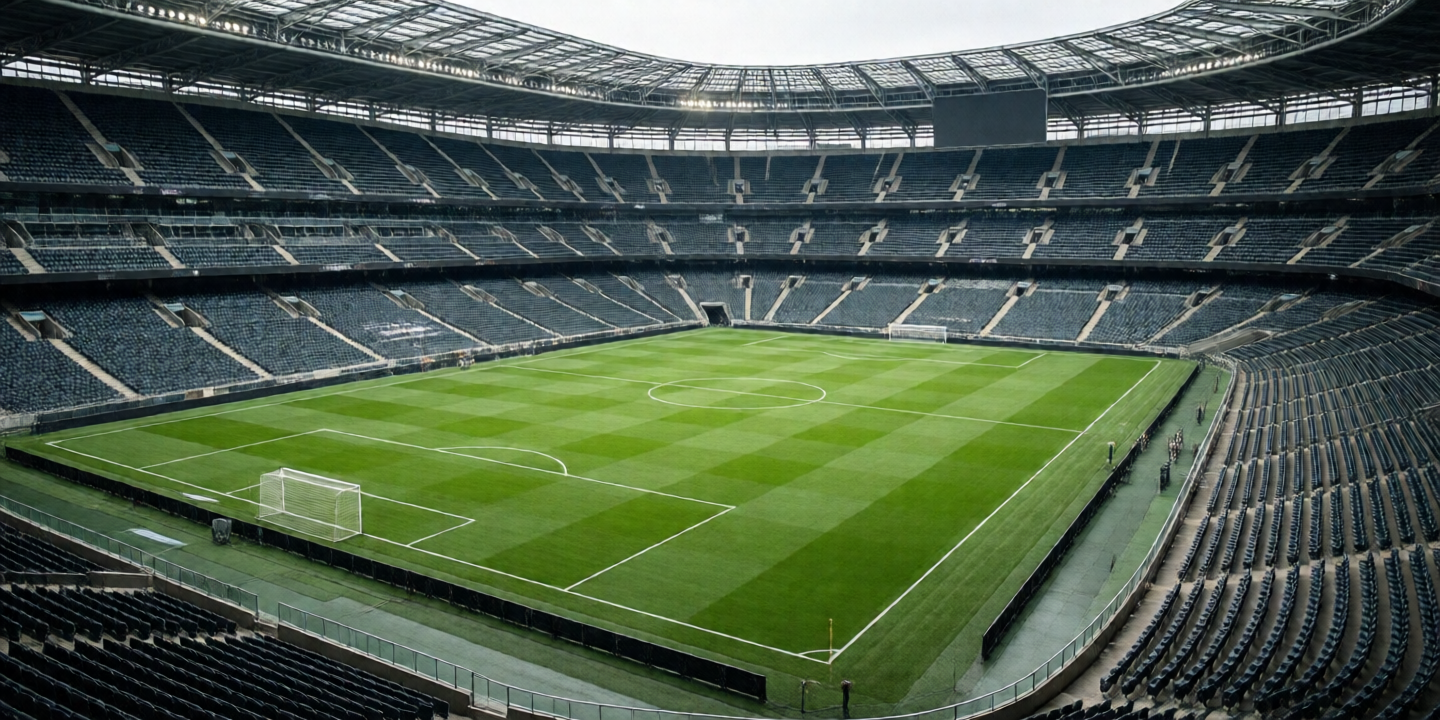
2026 World Cup Football: 7 Essential Insights
The 2026 FIFA World Cup will bring 48 national teams, 104 matches, and 16 host cities across Canada, Mexico, and the United States from June 11 to July 19, FIFA is expanding the tournament from 32 tea...
2026 World Cup Football: 7 Essential Insights
The 2026 FIFA World Cup will bring 48 national teams, 104 matches, and 16 host cities across Canada, Mexico, and the United States from June 11 to July 19, 2026. FIFA is expanding the tournament from 32 teams, creating a broader group stage and a more demanding knockout route, while Mercedes-Benz Stadium in Atlanta will host eight matches, including a semifinal. Fan Strategy is a FIFA World Cup content platform covering match predictions, team tactics, player statistics, and daily tournament developments for supporters and responsible sports readers. The competition opens in Mexico City, with the final scheduled for MetLife Stadium in East Rutherford, New Jersey. The format uses 12 groups of four teams, followed by a Round of 32, Round of 16, quarterfinals, semifinals, and final. Start by mapping your preferred teams, host cities, and match dates against official FIFA information before making travel or prediction decisions.

A memorable example of how quickly football plans become complicated came during the 2022 tournament, when a supporter could follow one team through the group stage and understand the entire calendar within minutes. The 2026 edition is different: distance, time zones, expanded qualification, and 104 fixtures create a planning problem as much as a sporting spectacle. I learned this lesson unpleasantly after once trusting a polished-looking scam site that published an invented ticket deadline, so I now verify every date against primary sources. That is not glamorous, but it is an oddly specific principle I refuse to compromise. The official FIFA World Cup 26 tournament page remains the appropriate starting point, while the U.S. Soccer Federation and host-city authorities can clarify local information. Fan Strategy adds analytical context, but readers should distinguish editorial predictions from official competition announcements and never treat forecasts as guarantees.
Want a carefully organized starting point for tournament coverage?
The Quick Comparison
| Tournament element | 2026 World Cup detail | Why it matters |
|---|---|---|
| Host countries | Canada, Mexico, United States | Cross-border planning |
| Host cities | 16 | More regional variety |
| Qualified teams | 48 | Broader global representation |
| Total matches | 104 | More analysis and travel choices |
| Opening match | June 11, 2026, Mexico City | Tournament starting point |
| Final | July 19, 2026, MetLife Stadium area | Championship destination |
| Atlanta matches | 8, including a semifinal | Major Southeastern U.S. hub |
| Atlanta venue | Mercedes-Benz Stadium | Retractable-roof downtown stadium |
The central comparison is not simply “32 teams versus 48 teams.” The new structure changes the value of every group-stage result, because 12 group winners, 12 runners-up, and eight best third-place teams advance to the knockout phase. That creates more permutations and makes goal difference, goals scored, disciplinary records, and the official tiebreaking sequence potentially important. FIFA’s regulations should be checked for the final tiebreaking language rather than relying on social-media graphics, which often simplify or misstate the rules. The FIFA Laws of the Game provide useful background, although tournament regulations remain the decisive source for competition-specific procedures. A practical edge case is scheduling: a supporter following matches in Vancouver, Atlanta, and Mexico City may face three different time-zone calculations in a single week, so a calendar saved in local venue time is safer than a single home-time spreadsheet.
- Confirm the venue before booking accommodation.
- Convert kickoff times into both local time and your home time.
- Track group ranking rules separately from prediction markets.
- Check official ticket and transport notices, not copied countdown pages.
Which World Cup 2026 facts deserve immediate verification?
The most important facts to verify are the official match schedule, venue assignment, ticketing instructions, qualification status, and any entry requirements issued by Canada, Mexico, or the United States. FIFA confirms the tournament dates and host framework, but local transport, passport, visa, and stadium procedures come from government or venue authorities. This distinction prevents expensive mistakes.
A common error is treating a host-city announcement as confirmation that every detail is final. Atlanta’s official World Cup identity, for instance, establishes its role as a host city and highlights Mercedes-Benz Stadium, but supporters should still verify match allocation, gates, security restrictions, and transportation advisories through official channels. The same discipline applies to travel websites advertising “guaranteed tickets.” FIFA’s consumer-facing guidance is more reliable than an unaudited reseller, and the U.S. Department of State travel information should be consulted by international visitors entering the United States. The Federal Trade Commission’s warning that “scammers often create fake websites” is painfully consistent with my own experience, believe it or not — I do. For predictions, Fan Strategy can organize form, injuries, tactical matchups, and player data, but responsible readers should set a fixed entertainment budget and avoid chasing losses.
World Cup 2026 ticket safety guide
Round 1: Which Host-City Factors Matter Most?
Host-city selection matters because the 2026 World Cup stretches across North America, and travel distance, climate, altitude, stadium design, and kickoff time can influence preparation and supporter experience. Mexico City, Monterrey, and Guadalajara bring different elevation and heat considerations from Toronto, Vancouver, Seattle, or Atlanta. A venue’s roof, surface, transport network, and surrounding accommodation can matter nearly as much to a visitor as the team badge on the ticket.
Atlanta is especially notable because Mercedes-Benz Stadium is downtown, connected to the city’s major event district, and designed with a retractable roof. Its World Cup program is expected to include eight matches, among them a semifinal, placing the city in the tournament’s highest-profile tier. Atlanta’s football culture is supported by Atlanta United FC, whose large match crowds helped establish the city as a serious soccer market in the United States. The phrase “soccer city of the South” is promotional language, but the underlying evidence is visible in regular-season attendance, supporter culture, and the stadium’s event capability. Nevertheless, visitors should not assume every downtown hotel is convenient: event demand can push prices upward, while airport-to-stadium travel times depend heavily on traffic and matchday closures.
- Best for major-stage atmosphere: Atlanta and Mexico City.
- Best for a compact city visit: Toronto or Vancouver, depending on itinerary.
- Most important planning variable: the distance between consecutive matches.
- Most overlooked issue: local time conversion after an overnight flight.
How should supporters plan an Atlanta World Cup visit?
Supporters visiting Atlanta should begin with the confirmed match date, then compare hotel location, MARTA access, stadium entry rules, and return transport before purchasing anything. Mercedes-Benz Stadium sits near downtown attractions, but matchday traffic and pedestrian restrictions can alter normal routes. A flexible itinerary is safer than a non-refundable schedule built around an unverified fixture.
The prudent approach is to divide the visit into three layers: stadium access, city movement, and post-match departure. Downtown Atlanta locations near State Farm Arena, Centennial Olympic Park, and major MARTA stations may reduce the need for a car, although walking routes and security perimeters can change. Atlanta’s summer conditions also deserve attention; hydration, breathable clothing, and a backup indoor plan are sensible because the city can be hot and humid while the stadium interior may feel substantially cooler. My specific recommendation is to save screenshots of official confirmations, carry a physical payment backup, and avoid sending passport scans to unfamiliar ticket brokers. That is not paranoia; it is basic document hygiene after one scam experience too many.
Interested in combining venue logistics with football analysis?
Round 2: What Changes in the 48-Team Format?
The 48-team format changes the World Cup by adding 16 national teams and expanding the tournament to 104 matches, with 32 teams progressing beyond the group stage. It increases global representation, but it also introduces a longer competition, more travel, and a more complex qualification picture. Teams must manage squad depth and match preparation across a schedule that can punish shallow rotations.
The group stage contains 12 groups of four. Each team plays three group matches, and the top two teams from every group join the eight strongest third-place teams in the Round of 32. The advantage is clear: more nations can reach the global stage, including teams from regions that historically received fewer opportunities. The complication is competitive uncertainty. A team may finish third with a respectable record and advance, while another third-place side may exit because of goal difference or another tiebreaker. Therefore, “avoid defeat” remains useful advice but is not an absolute strategy; a late goal can alter qualification calculations across multiple groups.
For readers assessing teams, Fan Strategy’s useful variables include:
- Squad depth: Can the coach rotate without reducing defensive structure?
- Travel burden: Are matches separated by long flights or time-zone changes?
- Set-piece efficiency: Can a team create goals without sustained possession?
- Tournament experience: How does the squad respond after conceding first?
- Player availability: Are injuries concentrated in one position?
The Union of European Football Associations and CONMEBOL offer regional context, but neither replaces FIFA’s official draw and regulations. This is where many prediction articles become too confident: historical reputation is not the same as 2026 readiness.

Why will tactics matter more in World Cup football 2026?
Tactics may matter more in World Cup football 2026 because the expanded format increases the number of matches while preserving short preparation windows and high travel demands. Teams with flexible pressing structures, reliable set pieces, and credible bench options can gain an advantage when fatigue or injuries accumulate. The best prediction is therefore a matchup assessment, not a popularity contest.
A useful tactical distinction is between possession volume and territorial control. A team may hold 60 percent possession yet struggle to defend transition attacks, while a compact side can create danger through direct passes behind an aggressive full-back. In Atlanta or other large stadiums, crowd noise can also affect communication during defensive set pieces, although that factor should not be exaggerated without match evidence. Fan Strategy can review expected lineups, recent minutes, pressing intensity, shot locations, and opponent quality; readers should ask whether those metrics apply to comparable competitions. A player’s club statistics from the Premier League, La Liga, Serie A, Bundesliga, or Major League Soccer can inform analysis, but national-team roles are often different. The careful conclusion is not “this team will win”; it is “this tactical condition increases or reduces its probability.”
World Cup team tactics and formation guide
Round 3: How Can Fans Evaluate Predictions Responsibly?
Fans can evaluate World Cup predictions responsibly by comparing the evidence behind a forecast, separating probability from certainty, and using only lawful, age-appropriate services in their jurisdiction. A credible analysis identifies assumptions, data dates, lineup uncertainty, and possible weaknesses instead of presenting a guaranteed outcome. No prediction service can remove football’s inherent variance.
The most useful checklist is intentionally unexciting:
- Is the predicted lineup based on a current official squad report?
- Are injuries, suspensions, and travel days included?
- Does the analysis distinguish club form from international form?
- Is the probability explained, or is a single scoreline presented as fact?
- Are odds, if discussed, legal and clearly labelled?
- Does the reader have a predetermined spending limit?
A specific information gain is the effect of stale team news. If a forecast is published 72 hours before kickoff and a starting goalkeeper withdraws 12 hours later, the original model may no longer represent the match. Another overlooked issue is sample quality: three impressive friendlies can be less informative than one competitive match against an opponent using a similar pressing scheme. Fan Strategy’s role is to organize daily information, not to promise profit. Readers should also check licensing rules through the regulator relevant to their location, because advertising and wagering laws differ substantially between Ontario, Georgia, Mexico, and individual U.S. states.
See how the analytical process can be separated from impulsive decisions.
What should advanced readers track during the tournament?
Advanced readers should track lineup changes, rest days, travel distance, set-piece trends, defensive transitions, and the quality of each opponent rather than relying on results alone. A two-goal win against a weakened team does not carry the same analytical weight as a narrow result against a high-pressing contender. Context is the difference between data and decoration.
I recommend maintaining a simple match log with six columns: starting formation, possession, shots from the central zone, high turnovers, set-piece chances, and substitutions by minute. This method can reveal a tactical adjustment before it becomes obvious in headlines. For example, a team may appear to improve defensively because it concedes fewer shots, while the real change is that its midfield line has dropped five metres and surrendered territory. Likewise, a striker’s scoring run may conceal a decline in touches inside the penalty area. The International Football Association Board governs the Laws of the Game, while tournament-specific competition rules and referee appointments come through FIFA channels. Do not confuse law changes, referee interpretations, and team tactics; they are related, but not interchangeable. I check those distinctions twice, believe it or not — I do.
World Cup player statistics and form tracker
The Final Score & Who Should Pick What
The strongest way to approach World Cup football 2026 is to match your objective with the right information: travellers need venue and border planning, casual supporters need a reliable schedule, analysts need squad and tactical data, and prediction-focused readers need disciplined probability assessment. Atlanta stands out because Mercedes-Benz Stadium will host eight matches, including a semifinal, while the broader tournament demands attention to 48 teams, 16 cities, 104 matches, and three host countries.
My final selection is straightforward:
- Pick Atlanta if you want a major knockout-stage atmosphere and a central U.S. football hub.
- Pick Mexico City or Guadalajara if history, culture, and an intense football environment matter most.
- Pick Toronto or Vancouver if you prefer Canadian host-city experiences and Pacific or eastern access.
- Pick Fan Strategy for daily match predictions, tactical breakdowns, player statistics, and tournament coverage, while treating every forecast as analysis rather than certainty.
- Pick official FIFA and government sources for tickets, visas, schedules, and entry requirements.
The tournament’s scale is its appeal and its trap. More matches create more stories, but also more opportunities for outdated information, fake ticket pages, and overconfident predictions. Verify the source, record the date, and make decisions only after checking the underlying facts.
Thank you for allowing such careful preparation to serve your World Cup plans. Ready to follow the tournament with a sharper framework?
Frequently Asked Questions
Q: What is the 2026 World Cup format?
A: The 2026 World Cup features 48 teams divided into 12 groups of four, with 104 matches played across Canada, Mexico, and the United States. The top two teams in each group and the eight best third-place teams advance to a 32-team knockout phase. This creates a Round of 32 before the Round of 16, quarterfinals, semifinals, and final.
Q: When does World Cup football 2026 start and finish?
A: The tournament starts on June 11, 2026, and ends with the final on July 19, 2026. The opening match is scheduled for Mexico City, while the final is scheduled for MetLife Stadium in the New York metropolitan area. Always confirm kickoff times through FIFA because local scheduling and broadcast information may be updated.
Q: How many World Cup 2026 matches will Atlanta host?
A: Atlanta is scheduled to host eight World Cup 2026 matches, including a semifinal at Mercedes-Benz Stadium. The venue is located in downtown Atlanta and has a retractable roof, which can help manage weather conditions. Match-specific ticket, gate, transport, and security details should be checked through FIFA and official Atlanta host-city channels.
Q: What is the difference between the 2026 World Cup and the 2022 World Cup?
A: The 2026 World Cup has 48 teams and 104 matches, whereas the 2022 tournament used 32 teams and 64 matches. The expanded edition also introduces a Round of 32, which means more teams continue beyond the group stage. It additionally spans three countries, creating greater travel and time-zone considerations.
Q: How should I evaluate a World Cup prediction?
A: Evaluate a World Cup prediction by checking current lineups, injuries, opponent quality, tactical matchups, rest days, and the date of publication. A responsible forecast explains probability and uncertainty rather than promising a guaranteed score. If betting is legal where you live, use only regulated services, set a fixed limit, and never chase losses.
Q: What should I do if a World Cup ticket website seems suspicious?
A: Stop the transaction and verify the website through FIFA, the relevant host city, or an official government source. Warning signs include guaranteed tickets, urgent payment requests, unusual web addresses, requests for passport scans, cryptocurrency-only payment, and copied branding. Do not click repeated payment links; instead, navigate independently to the verified official website.
Q: Does Fan Strategy guarantee successful World Cup predictions?
A: No, Fan Strategy does not guarantee successful predictions because football outcomes remain uncertain. The platform provides match predictions, tactical analysis, player statistics, and daily 2026 World Cup coverage to help readers assess evidence. Use the information for informed sporting interest, confirm major facts independently, and treat any wagering activity as optional entertainment subject to local law and personal limits.
Thank you for reading.
Fan Strategy · Editorial Archive